
Sem categoria
-
01/06/202623h26Notícia
Site Map
Site Map
-
31/05/202601h29Notícia
Coordination and NDE - Food Technology
COORDINATION AND NDE
Coordination:
Period: 2026
Prof. Dr. Fábio Ferreira Gonçalves (Coordinator)
Prof. Dr. Lenise Guimarães de Oliveira (Deputy Coordinator)Period: 2025
Prof. Dr. Kessiane Silva de Moraes (Coordinator)
Prof. Dr. Fábio Ferreira Gonçalves (Deputy Coordinator)Period: 2023-2024 (Pro-tempore)
Prof. Dr. Kessiane Silva de Moraes (Coordinator)
Prof. Dr. Fábio Ferreira Gonçalves (Deputy Coordinator)Core Structuring Faculty (NDE):
- Prof. Dr. Alex Leonardi
- Prof. Dr. Cassiano Ranzan
- Prof. Dr. Fábio Gonçalves (President)
- Prof. Dr. Fernanda Cabral Borges
- Prof. Dr. Fernanda Pagnussatt
- Prof. Dr. Juliana da Silveira Espíndola
- Prof. Dr. Kessiane Moraes
- Prof. Dr. Leandro Bellicanta
- Prof. Dr. Lenise Guimarães de Oliveira
- Prof. Dr. Marcelo Escobar Aragão
-
31/05/202601h23Notícia
Contact
CONTACT
Course Coordination
Chemical Process Technology (TPQ)
Coordinator: Prof. Dr. Fernanda Cabral Borges – Room 1217, Classroom Pavilion at UBP
Deputy Coordinator: Prof. Dr. Cassiano Ranzan – Room 1215, Classroom Pavilion at UBP
Phone: (51) 3662-8285
Email: coord_tecpquim@furg.brFood Technology (TAL)
Coordinator: Prof. Dr. Fabio Ferreira Gonçalves – Room 1, UCA
Deputy Coordinator: Prof. Dr. Lenise Guimaraes de Oliveira – Room 5, UCA
Phone: (51) 3662-7806
Email: coord_tecalim@furg.brAcademic Secretary – SAP
Secretary: Matheus Binotto Francescatto
2nd floor of the Administrative Building at Bom Princípio Unit
Rua Cel. Francisco Borges de Lima, 3005 – Bairro Bom Princípio
Santo Antônio da Patrulha / RS – ZIP 95500-000
Phone/WhatsApp: (51) 3662-8258
Office Hours:
Monday, Wednesday, Thursday and Friday: 8am to 12pm and 1pm to 5pm
Tuesday: 8am to 12pm and 4pm to 8pm
Email: secacad.sap@furg.brEQA Secretary – SAP
Secretary: Marcelo Correa de Souza
Phone/WhatsApp: (53) 99935-5556General Secretary – SAP
2nd floor of the Administrative Building at Bom Princípio Unit
Rua Cel. Francisco Borges de Lima, 3005 – Bairro Bom Princípio
Santo Antônio da Patrulha / RS – ZIP 95500-000
Phones: (51) 3662-8250 / 8251 / 8253 / 8255
Office Hours:
Monday, Wednesday, Thursday and Friday: 8am to 12pm and 1pm to 5pm
Tuesday: 8am to 12pm and 4pm to 8pm
Email: campus.sap@furg.brFor suggestions, complaints or reports, visit the FURG Ombudsman.
-
31/05/202601h22Notícia
Location
LOCATION
Santo Antônio da Patrulha Campus
BOM PRINCÍPIO UNIT: Rua Cel. Francisco Borges de Lima, 3005 - Bairro Bom Princípio. Santo Antônio da Patrulha / RS, ZIP: 95500-000.
CIDADE ALTA UNIT: Rua Barão do Cahy, 125 - Bairro Cidade Alta. Santo Antônio da Patrulha / RS, ZIP: 95500-000.
-
31/05/202601h21Notícia
Bom Princípio Unit
BOM PRINCÍPIO UNIT
The Bom Princípio Unit (UBP) is located in an area of 33 (thirty-three) hectares, donated by the Municipal Government in 2010, next to the neighborhood of the same name. It has a Pavilion containing 12 (twelve) classrooms, with capacity between 50 (fifty) and 100 (one hundred) students, all equipped with multimedia projector and internet access, 12 (twelve) faculty rooms and 1 (one) Collaborative Learning Space (EAC).
This pavilion also houses the Laboratory of Metallurgy, Mechanical Testing and Metrology; the Laboratory of Results Optimization and Decisions; Laboratory of Systems 2 and the Laboratory of Production Systems and Quality, linked to the School of Engineering.
At UBP there is also the Technology Center (FINEP CT Infra New Campuses 2009 Notice), linked to the School of Chemistry and Food, which houses one (01) Computer Laboratory, one (01) mini-auditorium and eleven (11) research laboratories: Laboratory of Catalytic Organic Synthesis; Laboratory of Research on Natural Products; Instrumentation Laboratory; Study Center and Development of Analytical Technologies and Compound Degradation; Agroindustrial Process Engineering Laboratory; Food Technology Laboratory + Food Analysis Laboratory; Microbiology Laboratory; Green Organic Synthesis Laboratory; Soil Laboratory; Thermodynamics and Kinetics of Degradative Processes Laboratory; Computer Laboratory and Management Laboratory.
The Administrative Building has 1 (one) room for lectures and small events, 1 (one) General Secretary, 1 (one) Postgraduate Secretariat, 3 (three) rooms for the FURG's Office of Student Affairs (PRAE); 1 (one) campus director's room, 1 (one) vice-director and public relations room, 1 (one) meeting room and 1 (one) library.
The FURG-SAP Campus Library is part of the Library System (SiB) of the Federal University of Rio Grande (FURG). It has spaces for study and reading, study rooms, computers for the academic community, physical and virtual collection through the Minha Biblioteca Platform.
At UBP, there is also 1 (one) Social Center for leisure, food and accommodation space for students, sports courts and 1 (one) Student House with housing for 60 (sixty) students.
-
31/05/202601h20Notícia
Cidade Alta Unit
CIDADE ALTA UNIT
The Cidade Alta Unit has 3 (three) classrooms equipped with boards, multimedia resources, air conditioning and internet access; 8 (eight) faculty rooms with air-conditioned environment, internet access and printer; 3 (three) Chemistry Teaching Laboratories, 1 (one) Physics Teaching Laboratory, 1 (one) Microbiology Laboratory, 1 (one) Biochemistry Laboratory, 1 (one) Computer Laboratory, 1 (one) Laboratory for Teaching and Research in Mathematics Education - LEPEMAT, 1 (one) chemical reagents storeroom, 1 (one) postgraduate secretariat and 1 (one) administrative support room. It also has leisure infrastructure, with a lounge and sports court. There is also a web conference room linked to the Distance Learning University Center.
The Chemistry Teaching Laboratories are divided into: Analytical Chemistry Teaching Laboratory; Biochemistry Laboratory; Microbiology Laboratory; Organic Chemistry Teaching Laboratory and General Chemistry Laboratory. The laboratories are equipped with important items for practical classes at higher education level, and are also used for extension and research activities. All environments are air-conditioned and have internet access.
The Physics Teaching Laboratory is a laboratory where experiments are conducted that support Experimental Physics A classes, as well as Physics Teaching Activity and Supervised Internship subjects.
The Computer Laboratory is dedicated to teaching activities for technology, undergraduate and postgraduate courses at the Campus, and is also available for research, extension, workshops and short courses.
The Laboratory for Teaching and Research in Mathematics Education – LEPEMAT aims to integrate the two areas that make up the initial training of the Mathematics teacher, articulating the subjects of pedagogical training and theoretical training, promoting a deep understanding of mathematical concepts. LEPEMAT integrates Teaching, Research and Extension activities related to Mathematics Education.
In addition to Teaching Laboratories, research laboratories are also located at UCA, such as the Laboratory of Residues and Contaminants Analysis, Electrochemistry and Instrumentation Laboratory, Organic Synthesis and Nanomaterial Development Laboratory, Process Development, Analysis and Simulation Laboratory and Research in the area of effluent treatment using Advanced Oxidation Processes.
-
31/05/202601h19Notícia
Infrastructure
INFRASTRUCTURE
The Chemical Process Technology and Food Technology courses have the infrastructure of the FURG-SAP campus, where theoretical classes, practical classes, computer classes, as well as research and extension activities are held. Physical resources are distributed between the Cidade Alta Unit (UCA) and the Bom Princípio Unit (UBP).
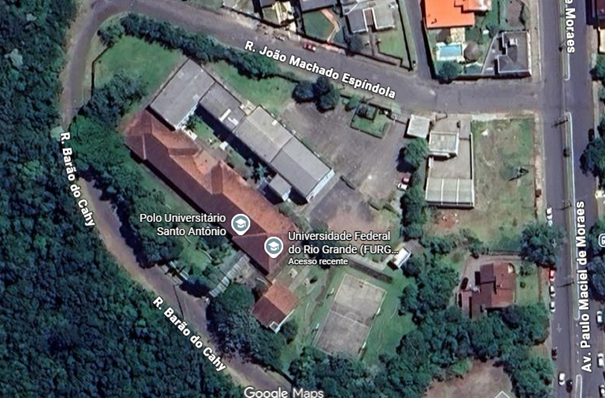
Aerial view of the Cidade Alta Unit of the FURG-SAP Campus
Source: Google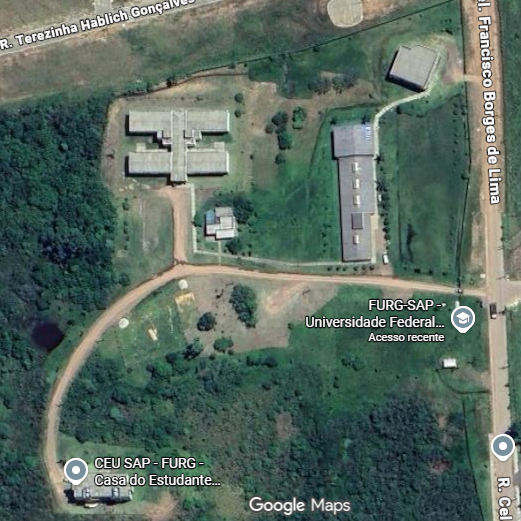
Aerial view of the Bom Princípio Unit of the FURG-SAP Campus
Source: Google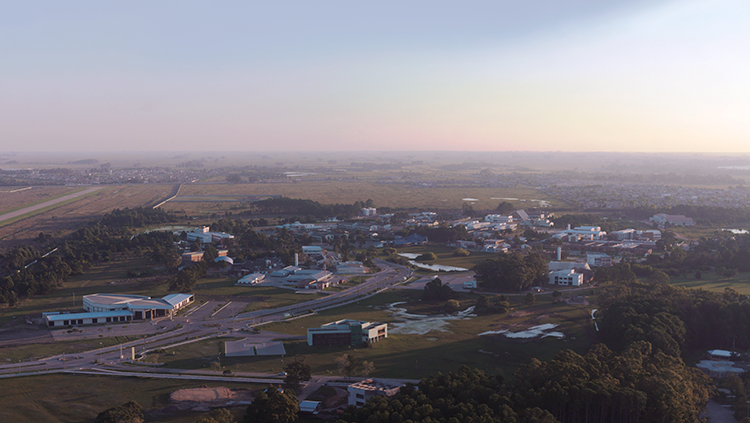
Aerial view of the FURG Carreiros Campus In addition to the infrastructure at the two campus units, the courses can also count on the infrastructure available at FURG's main campus, located at Campus Carreiros, in the city of Rio Grande-RS.
-
31/05/202601h18Notícia
I Want to Enroll
I WANT TO ENROLL
See the admission procedures on the Permanent Commission for the Selection Process website - COPERSE
-
31/05/202601h18Notícia
For Students
FOR STUDENTS
The For Students section brings together the main resources, tools and information to support the academic life of students of the Chemical Process Technology and Food Technology courses at FURG. The goal is to facilitate access to essential services of university daily life, gathering links and references organized in a practical and direct way.
Within this menu, the student will find the following items:
- FURG Systems — access to the institutional systems portal of the university, where it is possible to manage academic information such as enrollment, transcripts and other features.
- Academic Calendar — link to the official university calendar of FURG, with all important dates of the academic year, including class periods, exams, recesses and institutional events.
- Schedules and Rooms — consultation of subject schedules and the rooms where classes are held at the Santo Antônio da Patrulha Campus (SAP).
- Transportation — information about the transportation service available to students of the SAP Campus, facilitating student mobility.
- Academic Rules — access to FURG academic rules and regulations, made available by the Dean's Office of Undergraduate Studies (PROGRAD), governing students' rights and duties.
- AVA — link to FURG's Virtual Learning Environment, a platform used for course monitoring, access to teaching materials and online activities.
- SiB — access to FURG's Library System, where students can consult the bibliographic collection, borrow materials and access digital resources.
- ABNT — link to the library section dedicated to Brazilian Technical Standards Association standards, with guidelines for the correct preparation of academic and scientific works.
- PRAE — link to FURG's Office of Student Affairs, responsible for student assistance policies, scholarship programs, housing, food and socioeconomic support.
-
31/05/202601h17Notícia
Faculty and Staff
FACULTY AND STAFF
Teaching Staff
Faculty Member Degree Background CV Lattes Alex Leonardi PhD Economics Lattes Carla Eliete Iochims dos Santos PhD Physics Lattes Carla Weber Scheeren PhD Industrial Chemistry Lattes Carlos Honorato Schuch Santos PhD Civil Engineering Lattes Carlos Roberto de Menezes Peixoto PhD Industrial Chemistry Lattes Caroline Eliza Mendes PhD Chemical Engineering Lattes Cassiano Ranzan PhD Chemical Engineering Lattes Cristiano Rodrigues Garibotti PhD Applied and Computational Mathematics Lattes Cristina Beninça PhD Food Engineering Lattes Darlene Arlete Webler PhD Literature Lattes Fábio Ferreira Gonçalves PhD Industrial Chemistry Lattes Fernanda Arnhold Pagnussatt PhD Food Engineering Lattes Fernanda Cabral Borges PhD Chemical Engineering Lattes Fernanda Trombetta da Silva PhD Industrial Chemistry Lattes Fernando Kokubun PhD Physics Lattes Francine Silva Antelo PhD Chemical Engineering Lattes Gilber Ricardo Rosa PhD Chemistry Lattes Gustavo Mendes Platt PhD Chemical Engineering Lattes Itiara Gonçalves Veiga PhD Food Engineering Lattes Jorge Estuardo Tello Gamarra PhD Mechanical Engineering Lattes Juliana da Silveira Espíndola PhD Chemical Engineering Lattes Kessiane Silva de Moraes PhD Food Engineering Lattes Leandro Sebben Bellicanta PhD Mathematics Lattes Lenise Guimarães de Oliveira PhD Chemistry Lattes Leticia Tonetto PhD Mathematics Lattes Liane Francisca Hüning Pazinato PhD Law Lattes Marcelo de Godoi PhD Chemistry Lattes Marcelo Escobar Aragão PhD Chemical Engineering Lattes Marcelo Silveira Badejo PhD Agricultural Engineering Lattes Marco Aurélio Rocha Di Franco PhD Geography Lattes Meritaine da Rocha PhD Food Engineering Lattes Neusa Fernandes de Moura PhD Chemistry Lattes Roberto de Souza Gomes da Silva PhD Food Engineering Lattes Rodrigo Marques Leistner PhD Social Communication Lattes Sabrina Skrebsky Richter PhD Physics Lattes Toni Jefferson Lopes PhD Food Engineering Lattes Technical Staff
Staff Member Degree Background CV Lattes Anna Carolina Nickel Meireles Master Chemistry Lattes Clarissa Helena Rosa PhD Chemistry Lattes Marcelo de Souza Correa Master Administration Lattes Márcia Helena Scherer Kurz PhD Industrial Chemistry Lattes Patrícia Gomes Costa PhD Chemistry/Nutrition Lattes -
31/05/202601h14Notícia
Curricular Structure - Food Technology
CURRICULAR STRUCTURE
Logical Sequence Framework (QSL) of the Food Technology course: access
Mandatory subjects of the Food Technology course
SEMESTER CODE MANDATORY SUBJECTS TOTAL W.H. CREDITS 1st 02569 Introduction to Food Technology 30 2 02179 Introduction to Laboratory Practice 30 2 02345 General and Experimental Chemistry I 60 4 02289 Organic Chemistry I 60 4 101109 Culture, Technology and Society 30 2 07567 Applied Economics for Engineering 45 3 02570 Health and Environmental Risk Control in Agroindustries 30 2 01469 Numbers and Functions 60 4 2nd 02197 Biochemistry 60 4 06696 Academic Reading and Writing 60 4 07569 Accounting and Finance 45 3 02571 Food Analysis 60 4 02572 Quality Control 30 2 02573 Food Chemistry 45 3 3rd 02295 Physical Chemistry I 60 4 02190 Microbiology 60 4 07570 Management 60 4 02215 Agroindustrial Installations - Food Industry Emphasis 60 4 02203 Environmental Management 60 4 02349 Qualitative Analytical Chemistry 60 4 02574 Sensory Analysis 30 2 4th 02552 Entrepreneurship and Innovation 60 4 101108 Cultural Diversity and Ethnic-Racial Relations 60 4 02543 Food Processing I 60 4 02544 Food Hygiene and Legislation 60 4 02194 Industrial Microbiology 60 4 02575 New Product Development 30 2 5th 02576 Food Processing II 60 4 02577 Grain Technology 45 3 02578 Meat Technology 45 3 6th 02579 Supervised Internship* 435 29 02580 Internship Monograph 90 6 *Prerequisite: have completed 1,440h of the course workload (60%).
Optional subjects of the Food Technology course
SEMESTER CODE OPTIONAL SUBJECTS TOTAL W.H. CREDITS 2nd 08436 Human Rights 60 4 3rd 06497 Brazilian Sign Language (Libras) I 60 4 4th 06498 Brazilian Sign Language (Libras) II 60 4 5th 02551 Operations and Logistics Management 60 4 02237 Vegetable Oil Technology 60 4 02584 Beverage Technology 45 3 02582 Fruit and Vegetable Technology 45 3 02581 Milk and Dairy Technology 45 3 02583 Confectionery technology 45 3 -
30/05/202621h22Notícia
Internship Monograph - Food Technology
INTERNSHIP MONOGRAPH
The internship monograph aims at the development of a technical-scientific work conducted according to scientific methodology and has the purpose of producing knowledge through the application of concepts, analysis and synthesis of experiences and learnings accumulated throughout the course.
The student must demonstrate the capacity to develop a work of synthesis and integration of knowledge in the area of Food Technology, autonomously and independently, under the supervision of a faculty member of the course or a faculty member in a related area of the FURG-SAP campus.
The internship monograph will be individual, related to professional duties, and its theme will be chosen together with the supervising professor based on the analysis and resolution of a problem detected during internship activities, in an area related to the undergraduate course. It will consist of a final report (internship monograph) and an oral presentation to an examining committee, which will be open to the public.
-
30/05/202621h21Notícia
Internship - Food Technology
INTERNSHIP
The supervised internship is mandatory in nature and aims to provide students with the real practices of the Food Technologist profession, completing their educational itinerary. It is described in the curriculum in the form of the mandatory subject as "supervised internship", comprising 435 hours (29 credits).
At this stage, the student has the opportunity to improve theoretical-practical knowledge and interpersonal relationships, experience industry and society problem situations, implement, supervise, control and devise technology solutions, and work and lead multidisciplinary teams.
The Supervised Internship follows the provisions of Law No. 11,788, of September 25, 2008, and the Dean's Office of Student Affairs - PRAE, through Joint Normative Instruction No. 01/2016, of December 14, 2016, together with the Dean's Office of Undergraduate Studies - PROGRAD, establish the procedures for the completion and monitoring of curricular internships of courses.
The Dean's Office of Student Affairs (PRAE) of FURG provides students with details of the procedures and forms necessary for the completion of the Supervised Internship and its final report, which make up the subject "Internship Monograph".
-
30/05/202621h20Notícia
Extension Activities - Food Technology
EXTENSION ACTIVITIES
The Ministry of Education, through Resolution CNE/CES No. 7, of December 18, 2018, establishes the Guidelines for Extension in Brazilian Higher Education. According to Article 4 of this document, the extension workload must comprise at least 10% of the total student curricular workload of undergraduate courses, integrating the curricular matrix. In addition to this Resolution, the curricular insertion of extension must observe the following guiding documents: Resolution No. 027, of December 11, 2015, of the University Council - CONSUN, which provides for the University Extension Policy of FURG; Resolution No. 29, of March 25, 2022, of the Council of Teaching, Research, Extension and Administration - COEPEA, which regulates the process of curricularization of extension actions at FURG.
Extension activities constitute decisive contributions to students' education, both by expanding the universe of references they provide and by direct contact with major contemporary issues. These results enable enrichment of students' experience in theoretical and methodological terms, while also allowing for the reaffirmation and materialization of the ethical and solidarity commitments of Brazilian public education. Extension in the Higher Technology Course in Food must be articulated with teaching and research, and is understood as an eminently educational, cultural, technical-scientific and pedagogical process.
The Higher Technology Course in Food requires a minimum workload of 240 hours of extension activities. The curricular insertion of extension will be characterized in the PPC through: I. Hybrid subjects, with theoretical and extension workload, totaling 45 hours; II. Extension activities outside the QSL of the course, of a minimum of 195 hours.
-
30/05/202621h19Notícia
Course Rules - Food Technology
COURSE RULES
This section contains the regulations and rules that guide the academic activities of the Food Technology course. The documents available here establish the procedures, criteria and requirements for fulfilling mandatory curricular activities, in accordance with the Pedagogical Project (PPC) of the course.
Use the menu to access the specific rules for each modality:
- Extension Activities — regulation that defines the guidelines for the development and use of university extension activities provided for in the course curriculum;
- Internship — rules governing the supervised internship, including approval requirements, required documentation and responsibilities of those involved;
- Internship Monograph — guidelines for the preparation and evaluation of the internship monograph, the final course work required for curriculum completion.
-
30/05/202621h18Notícia
-
30/05/202621h17Notícia
Graduate Profile - Food Technology
GRADUATE PROFILE
The graduate profile of the Higher Technology Course, following the General National Curriculum Guidelines for Professional and Technological Education (CNE/CP Resolution No. 1/2021, of January 5, 2021, of the National Education Council), establishes that professional training must be obtained in an integrated manner with other education modalities and with the dimensions of work, science, culture and technology, and must be organized in technological axes according to the socio-occupational structure of work and the requirements of professional training in the various stages of development; considering current laws and regulations.
The Higher Technology Course in Food has in its educational itinerary the interdisciplinary elements that guide the organization of the course, giving visibility to the offer of Professional and Technological Education. Thus, the educational trajectory addresses the aspects of professionalization practiced in the world of work, the socio-occupational structure of the area of professional activity, and the scientific-technological foundations of the productive processes of goods and services.
This is an updated profile aligned with market demands for the training of a technology professional prepared for the exercise of the profession, integrated with science, culture and technology; committed to sustainable development and efficient management of resources, goods and services, and capable of promoting innovation in processes. Some of the competencies and skills related to the production of food and beverages and required for the exercise of the Food Technologist profession are:
- Conducting chemical, microbiological, sensory, toxicological and environmental analyses;
- Managing and executing processing and beneficiation processes;
- Managing and executing programs for conservation and quality control, equipment maintenance and waste management;
- Management, entrepreneurship, innovation and development of new industry products;
- Inspection, expertise, evaluation and issuance of technical reports and opinions;
- Willingness to work in teams; creativity; fondness for challenges; scientific curiosity; methodical and detail-oriented personality; leadership spirit and capacity to develop logical reasoning.
-
30/05/202621h16Notícia
Food Technology
FOOD TECHNOLOGY
The course will enable the training of a technologist professional to work in the food and beverage industry, providing theoretical and practical knowledge necessary to ensure quality, safety, processing, storage and technological innovations in the food area, improving traditional production and industrialization processes.
Profile: The professional should be able to work in advisory, consulting, processing and quality control in food and beverages, chemical, microbiological, sensory, toxicological and environmental analyses, product development and the ability to collaborate with multidisciplinary teams, with a commitment to professional ethics and the sustainable development of the sector.
Basic data:
- Denomination: Higher Technology Course in Food
- Degree conferred: Technologist in Food
- Level: Technologist
- Mode: In-person (with distance learning workload)
- Shift: Afternoon and evening (1:30 PM to 11:10 PM)
- Spots: 25 per year
- Duration: 6 semesters (minimum) / 11 semesters (maximum)
- Total workload: 2,400 hours
- Extension workload: 240 hours
- Distance learning workload: 390 hours
- Supervised internship: 435 hours (mandatory)
- Authorization act: COEPEA/FURG Resolution No. 97, of August 25, 2023
- Start of activities: 1st semester of 2024
- Location: Santo Antônio da Patrulha Campus (FURG-SAP), Cidade Alta (UCA) and Bom Princípio (UBP) units
-
30/05/202621h15Notícia
Coordination and NDE - Chemical Process Technology
COORDINATION AND NDE
Coordination:
Period: 2026
Prof. Dr. Fernanda Cabral Borges (Coordinator)
Prof. Dr. Cassiano Ranzan (Deputy Coordinator)Period: 2025
Prof. Dr. Fernanda Arnhold Pagnussatt (Coordinator)
Prof. Dr. Fernanda Cabral Borges (Deputy Coordinator)Period: 2023-2024 (Pro-tempore)
Prof. Dr. Fernanda Arnhold Pagnussatt (Coordinator)
Prof. Dr. Cristina Beninça (Deputy Coordinator)Core Structuring Faculty (NDE):
- Prof. Dr. Alex Leonardi
- Prof. Dr. Cassiano Ranzan
- Prof. Dr. Fábio Gonçalves
- Prof. Dr. Fernanda Cabral Borges (President)
- Prof. Dr. Fernanda Pagnussatt
- Prof. Dr. Juliana da Silveira Espíndola
- Prof. Dr. Kessiane Moraes
- Prof. Dr. Leandro Bellicanta
- Prof. Dr. Lenise Guimarães de Oliveira
- Prof. Dr. Marcelo Escobar Aragão
-
30/05/202621h14Notícia
Internship Monograph - Chemical Process Technology
INTERNSHIP MONOGRAPH
The Internship Monograph is a mandatory curricular component of the Higher Technology Course in Chemical Processes at FURG and aims at the development of a technical-scientific work conducted according to scientific methodology. Its purpose is the production of knowledge through the application of concepts, analysis and synthesis of experiences and learnings accumulated throughout the course and applied during the supervised internship.
The student must demonstrate the capacity to propose and develop a work of synthesis and integration of knowledge in the area of Chemical Process Technology, autonomously and independently, under the supervision of a faculty member of the course or in a related area. The Internship Monograph must focus on themes related to the analysis and resolution of a problem detected during internship activities, in an area related to the technology course, and must contribute to the development of the competencies and skills required by the professional in the area of Chemical Processes.
The Internship Monograph is individual, related to professional duties, and its theme will be chosen together with the supervising professor. It will consist of a work proposal, a final report (monograph) and an oral presentation to an examining committee, which is open to the public.
-
30/05/202621h13Notícia
Internship - Chemical Process Technology
INTERNSHIP
The internship is mandatory in nature and aims to provide students with the real practices of the Technologist in Chemical Processes profession, completing the student's educational itinerary. It is described in the curriculum in the form of the mandatory subject Mandatory Internship, comprising 300 hours (20 credits). At this stage, the student has the opportunity to improve theoretical-practical knowledge, improve interpersonal relationships, experience industry and society problem situations, implement, supervise, control and devise technology solutions, and work and lead multidisciplinary teams.
The Dean's Office of Student Affairs (PRAE) of FURG provides all necessary information to students such as: details of procedures and forms for the internship and the final report. The Mandatory Internship follows the provisions of Law No. 11,788 of September 25, 2008 and Joint Normative Instruction No. 01/2016 of the Dean's Office of Student Affairs - PRAE; and the Dean's Office of Undergraduate Studies - PROGRAD establishes procedures for the completion and monitoring of curricular internships.
-
30/05/202621h11Notícia
Extension Activities - Chemical Process Technology
EXTENSION ACTIVITIES
The Ministry of Education, through Resolution CNE/CES No. 7, of December 18, 2018, establishes the Guidelines for Extension in Brazilian Higher Education. According to Article 4 of this document, the extension workload must comprise at least 10% of the total student curricular workload of the courses, integrating the curricular matrix. In addition to this resolution, the curricular insertion of extension must observe the following guiding documents: Resolution 027/2015 CONSUN, which provides for the University Extension Policy of FURG; Resolution 29/2022 COEPEA, which regulates the process of curricularization of extension actions at FURG.
Extension activities constitute decisive contributions to students' education, both by expanding the universe of references they provide and by direct contact with major contemporary issues. These results enable enrichment of students' experience in theoretical and methodological terms, while also allowing for the reaffirmation and materialization of the ethical and solidarity commitments of Brazilian public education. Extension in the Higher Technology Course in Chemical Processes must be articulated with teaching and research, and is understood as an eminently educational, cultural, technical-scientific and pedagogical process.
The Pedagogical Course Plan provides for the allocation of at least 10% of the total workload of the Higher Technology Course in Chemical Processes for purposes of curricular insertion of extension activities. Extension activities will be characterized in the Pedagogical Course Plan according to the modalities provided for in Article 4 of Joint Normative Instruction PROEXC/PROGRAD/FURG No. 1, of April 8, 2022: programs; projects; courses and workshops; events; and service provision in extension. For curricularization purposes, the student must, obligatorily, be part of the execution team of the extension action. The modalities courses, events or workshops may count workload for curricularization purposes, provided the audience is primarily from the external community.
The Higher Technology Course in Chemical Processes requires a minimum workload of 240 hours of extension activities. The curricular insertion of extension will be characterized in the PPC through: i) hybrid subjects, with theoretical and extension workload, totaling 30 hours; ii) extension activities outside the QSL of the course, of a minimum of 210 hours.
-
30/05/202621h10Notícia
Course Rules - Chemical Process Technology
COURSE RULES
This section contains the regulations and rules that guide the academic activities of the Chemical Process Technology course. The documents available here establish the procedures, criteria and requirements for fulfilling mandatory curricular activities, in accordance with the Pedagogical Project (PPC) of the course.
Use the menu to access the specific rules for each modality:
- Extension Activities — regulation that defines the guidelines for the development and use of university extension activities provided for in the course curriculum;
- Internship — rules governing the supervised internship, including approval requirements, required documentation and responsibilities of those involved;
- Internship Monograph — guidelines for the preparation and evaluation of the internship monograph, the final course work required for curriculum completion.
-
30/05/202621h09Notícia
Curricular Structure - Chemical Process Technology
CURRICULAR STRUCTURE
Logical Sequence Framework (QSL) of the Chemical Process Technology course: access
Mandatory subjects of the Chemical Process Technology course
SEMESTER CODE MANDATORY SUBJECTS W.H. CREDITS DL W.H. PREREQUISITES 1st 02585 Introduction to Chemical Process Technology 30 2 -- -- 01469 Numbers and Functions 60 4 -- -- 02289 Organic Chemistry I 60 4 -- -- 02345 General and Experimental Chemistry I 60 4 -- -- 101109 Culture, Technology and Society 30 2 -- -- 07567 Applied Economics for Engineering 45 3 -- -- 02179 Introduction to Laboratory Practice 30 2 -- -- 02570 Health and Environmental Risk Control in Agroindustries 30 2 30** -- 2nd 02324 Introduction to Materials Science 60 4 -- -- 06696 Academic Reading and Writing 60 4 -- -- 02351 Quantitative Analytical Chemistry 60 4 -- -- 01428 Experimental Physics A 45 3 -- -- 01351 Calculus I 60 4 -- -- 02290 Inorganic Chemistry 60 4 -- -- 3rd 02295 Physical Chemistry I 60 4 -- -- 02537 Transport Phenomena 60 4 -- -- 07570 Management 60 4 -- -- 02187 Introduction to Industrial Processes 60 4 -- -- 03241 Fluids and Thermodynamics 60 4 -- -- 02229 Industrial Biochemistry 60 4 -- -- 02541 Statistical Quality Control 45 3 -- -- 4th 02539 Unit Operations I 60 4 -- -- 02552 Entrepreneurship and Innovation 60 4 -- -- 02586 Chemical Industry Processes I 30 2 30** -- 02587 Chemical Industry Processes II 30 2 30** -- 02232 Instrumentation and Control 60 4 -- -- 02205 Effluent Treatment 60 4 -- -- 5th 02203 Environmental Management 60 4 -- -- 02235 Planning and Design of Agrochemical Installations 60 4 -- -- 02228 Kinetics and Reactor Design 60 4 -- -- 02540 Unit Operations II 60 4 -- -- 02559 Industrial Process Engineering 45 3 -- -- 6th 02588 Supervised Internship 300 20 * * 02589 Internship Monograph 60 4 60** -- *Must have completed at least 1,000 hours of the current QSL workload of the Course;
** Total mandatory DL workload: 150 hours.Optional subjects of the Chemical Process Technology course
SEMESTER CODE OPTIONAL SUBJECTS W.H. CREDITS DL W.H. PREREQUISITES 2nd 101108 Cultural Diversity and Ethnic-Racial Relations 60 4 -- -- 07569 Accounting and Finance 45 3 -- -- 08436 Human Rights 60 4 -- -- 3rd 02551 Operations and Logistics Management 60 4 -- -- 06497 Brazilian Sign Language (Libras) I 60 4 -- -- 4th 02302 Instrumental Analysis 60 4 -- -- 06498 Brazilian Sign Language (Libras) II 60 4 -- -- 5th 02238 Alcoholchemistry Technology 60 4 -- -- 02237 Vegetable Oil Technology 60 4 -- -- 02562 Essential Oil Technology 45 3 -- -- 02242 Wood Technology 45 3 -- -- 02239 Biofuel Technology 45 3 -- -- 02584 Beverage Technology* 45 3 30 -- 6th 02560 Industrial Process Engineering II 45 3 -- -- * Total optional DL workload: 30 hours.
-
30/05/202621h05Notícia
-
30/05/202620h58Notícia
Graduate Profile - Chemical Process Technology
GRADUATE PROFILE
The Higher Technology Course in Chemical Processes is a course in the Chemistry area focused on training professionals to work in chemical production processes. This course aims to provide industries and service companies with a professional qualified to identify and analyze production processes, proposing viable solutions from a technical and economic point of view, as well as participating in the study, construction and assembly of industrial chemical process systems. It also focuses on providing an interface between the professional in the chemical area and the production process, seeking to promote the development of clean technologies.
The graduate profile of the Higher Technology Course in Chemical Processes, in accordance with CNE/CP Resolution No. 1 of January 5, 2021, which defines the General National Curriculum Guidelines for Professional and Technological Education, must encompass the following characteristics:
- I – have a holistic and humanist vision, be critical, reflective, creative, cooperative and ethical and with strong technical training;
- II – be able to act in the application, development, applied research and technological innovation and the dissemination of technologies;
- III – manage processes for the production of goods and services;
- IV – be able to recognize users' needs, formulate, analyze and creatively solve problems related to the area of chemical processes;
- V – adopt inter-, multi- and transdisciplinary perspectives in their practice;
- VI – consider global, political, economic, social, environmental, cultural and occupational health and safety aspects;
- VII – act with impartiality and commitment to social responsibility and sustainable development;
- VIII – operationalize processes in the chemical industry;
- IX – optimize analytical processes within the scope of quality control of raw materials, reagents and products of industrial chemical processes;
- X – plan, manage and conduct laboratory tests and analyses, as well as interpret the results;
- XI – select and adapt methods and techniques for conducting industrial processes;
- XII – inspect, evaluate and issue technical opinions according to the field of activity in the area of chemical processes.
The professional trained by the course, Technologist in Chemical Processes, will be qualified to work in various industrial and technological sectors. They may work in chemical process industries in areas such as petrochemicals, agrochemicals, electrochemicals, food and beverages, paper and pulp, ceramics, pharmaceuticals, textiles, pigments and paints, plastics, cement, metallurgy, steelmaking, among others; water and effluent treatment stations; physical-chemical and microbiological analysis laboratories; institutes, centers and research and development companies; and also in educational institutions, provided the training required by current legislation is met.
-
30/05/202620h56Notícia
Chemical Process Technology
CHEMICAL PROCESS TECHNOLOGY
The course will enable the training of a technologist professional capable of analyzing, interpreting, planning, operating and conducting chemical processes, taking into account the analytical and quality controls of these processes and the products developed.
Profile: The professional should be able to work in advisory, consulting, chemical product production, operations and process control, equipment maintenance and operation, laboratory analysis, development, research and scientific investigation, among many other functions.
Basic data:
- Denomination: Higher Technology Course in Chemical Processes
- Degree conferred: Technologist in Chemical Processes
- Level: Technologist
- Mode: In-person (with distance learning workload)
- Shift: Afternoon and evening (1:30 PM to 11:10 PM)
- Spots: 25 per year
- Duration: 6 semesters (minimum) / 11 semesters (maximum)
- Total workload: 2,400 hours
- Extension workload: 240 hours
- Distance learning workload: 150 hours
- Supervised internship: 300 hours (mandatory)
- Authorization act: COEPEA/FURG Resolution No. 98, of August 25, 2023
- Start of activities: 1st semester of 2024
- Location: Santo Antônio da Patrulha Campus (FURG-SAP), Cidade Alta (UCA) and Bom Princípio (UBP) units
-
30/05/202620h54Notícia
Home
The School of Chemistry and Food (EQA) of the Federal University of Rio Grande (FURG) offers, at the Santo Antônio da Patrulha Campus (FURG-SAP), two free short-term higher technology courses: Chemical Process Technology (TPQ) and Food Technology (TAL).
Both are in-person courses, lasting three years (six semesters), offering 25 annual spots and conferring the title of Technologist. Academic activities take place at the two campus units, Cidade Alta (UCA) and Bom Princípio (UBP), in the afternoon and evening shifts, compatible with the routine of those already in the job market. The total workload is 2,400 hours and includes mandatory supervised internship, curricular extension activities and subjects with a distance learning component (EaD).
The TPQ trains professionals capable of analyzing, planning, operating and managing chemical processes in different industrial segments, with attention to analytical control and the quality of products and processes. The TAL prepares professionals to work in the food and beverage industry, mastering the stages of processing, quality control, safety, sensory analysis and new product development.
To learn more about FURG, EQA, Campus-SAP and each Technology course, visit the specific pages in the menu.
-
29/05/202612h16Notícia
Unidade Bom Princípio
A Unidade Bom Princípio (UBP) localiza-se em uma área de 33 (trinta e três) hectares, doada pela Prefeitura Municipal no ano de 2010, junto ao bairro de mesmo nome. Possui um Pavilhão contendo 12 (doze) salas de aula, com capacidade entre 50 (cinquenta) e 100 (cem) discentes, todas equipadas com projetor multimídia e com acesso à internet, 12 (doze) salas de permanência para docentes e 1 (um) Espaço de Aprendizagem Colaborativa (EAC).
Neste pavilhão também estão alocados o Laboratório de Metalurgia, Ensaio Mecânicos e Metrologia; o Laboratório de Otimização de Resultados e Decisões; o Laboratório de Sistemas 2 e o Laboratório de Sistemas de Produção e Qualidade, vinculados à Escola de Engenharia.
Na UBP encontra-se também o Centro Tecnológico (Edital FINEP CT Infra Novos Campi 2009), vinculado à Escola de Química e Alimentos, onde estão alocados um (01) Laboratório de Informática, um (01) miniauditório e onze (11) laboratórios de pesquisa, sendo estes: Laboratório de Síntese Orgânica Catalítica; Laboratório de Pesquisas em Produtos Naturais; Laboratório de Instrumentação; Central de Estudos e Desenvolvimento de Tecnologias Analíticas e de Degradação de Compostos; Laboratório de Engenharia de Processos Agroindustriais; Laboratório de Tecnologia de Alimentos + Laboratório de Análise de Alimentos; Laboratório de Microbiologia; Laboratório de Síntese Orgânica Verde; Laboratório de Solos; Laboratório de Termodinâmica e Cinética de Processos Degradativos Laboratório de Informática e Laboratório de Gestão. Nesses laboratórios, os acadêmicos dos cursos oferecidos no campus têm a oportunidade de participar das atividades de pesquisa e extensão das mais diversas áreas, tais como catálise, química analítica, análise de alimentos, processos, síntese orgânica, óleos vegetais/essenciais, simulação de processos, solos, efluentes, entre outras.
O Prédio Administrativo conta com 1 (uma) sala para palestras e pequenos eventos, 1 (uma) Secretaria geral, 1 (uma) Secretaria de pós-graduação, 3 (três) salas destinadas à Pró-reitoria de Assuntos Estudantis (PRAE); 1 (uma) sala da direção do campus, 1 (uma) sala da vice-direção e de relações públicas, 1 (uma) sala de reuniões e 1 (uma) biblioteca.
A Biblioteca do Campus FURG-SAP integra o Sistema de Bibliotecas (SiB) da Universidade Federal do Rio Grande (FURG), órgão ligado à Pró-Reitoria de Graduação - PROGRAD. Possui espaço para estudo e leitura, salas de estudos, computadores para uso da comunidade acadêmica, acervo físico e virtual através da Plataforma Minha Biblioteca.
Na UBP, encontra-se ainda 1 (um) Centro de Convivência destinado a oferecer espaço de lazer, alimentação e permanência para os estudantes, quadras de esporte e 1 (uma) Casa de Estudante com moradia para 60 (sessenta) estudantes.
-
29/05/202612h16Notícia
Unidade Cidade Alta
A Unidade Cidade Alta conta com 3 (três) salas de aula equipadas com quadros, recursos multimídias, ar condicionado e acesso à internet; 8 (oito) salas de permanência de docentes, com ambiente climatizado, acesso à internet e impressora; 3 (três) Laboratórios de Ensino de Química, 1 (um) Laboratório de Ensino de Física, 1 (um) Laboratório de Microbiologia, 1 (um) Laboratório de Bioquímica, 1 (um) Laboratório de Informática, 1 (um) Laboratório de Ensino e Pesquisa em Educação Matemática - LEPEMAT, 1 (um) almoxarifado para reagentes químicos, 1 (uma) secretaria de pós-graduação e 1 (uma) sala de apoio administrativo. Conta ainda com infraestrutura de lazer, com ponto de convivência e quadra de esportes. Há também sala de webconferência vinculada ao Polo Universitário EaD.
Os Laboratórios de Ensino de Química estão separados em: Laboratório de Ensino de Química Analítica; Laboratório de Bioquímica; Laboratório de Microbiologia; Laboratório de Ensino de Química Orgânica e Laboratório de Química Geral. Os laboratórios são equipados com itens importantes para as aulas práticas dos cursos de nível superior, sendo utilizados também para atividades de extensão e pesquisa. Todos os ambientes são climatizados e possuem acesso à internet.
O Laboratório de Ensino de Física é um laboratório no qual são realizados experimentos que servem de subsídios para as aulas de Física Experimental A, bem como para as disciplinas de Atividades de Ensino de Física e Estágios Supervisionados.
O Laboratório de Informática é destinado às atividades de ensino dos cursos de tecnologia, graduação e de pós-graduação do Campus, estando também disponível para atividades de pesquisa, extensão, oficinas e minicursos.
O Laboratório de Ensino e Pesquisa em Educação Matemática – LEPEMAT tem o objetivo de integrar as duas áreas que compõem a formação inicial do professor de Matemática, articulando as disciplinas de formação pedagógica e as de formação teórica, promovendo uma compreensão profunda dos conceitos matemáticos. O LEPEMAT integra as atividades de Ensino, Pesquisa e Extensão relacionadas à Educação Matemática.
Além dos laboratórios de Ensino, também estão alocados na UCA laboratórios de pesquisa, tais como o Laboratório de Análise de Resíduos e Contaminantes, Laboratório de Eletroquímica e Instrumentação, Laboratório de Síntese Orgânica e de Desenvolvimento de Nanomateriais, Laboratório de Desenvolvimento, Análise e Simulação de Processos e de Pesquisa na área de tratamento de efluentes utilizando Processos Oxidativos Avançados.
-
29/05/202601h04Notícia
Monografia de Estágio
A monografia de estágio visa o desenvolvimento de um trabalho técnico-científico conduzido conforme metodologia científica e tem por finalidade a produção de conhecimento através da aplicação de conceitos, análise e síntese de experiências e aprendizagens acumuladas ao longo do curso.
O acadêmico deverá demonstrar capacidade de elaborar um trabalho de síntese e integração de conhecimentos na área de Tecnologia de Alimentos, de forma autônoma e independente, sob supervisão de um docente do curso ou um docente da área correlata do campus FURG-SAP.
A monografia de estágio será individual, relacionada com as atribuições profissionais e o seu tema será escolhido juntamente com o professor-orientador a partir da análise e resolução de um problema detectado durante as atividades de estágio, em área correlata ao curso de graduação. Este será constituído por um relatório final (monografia de estágio) e uma apresentação oral para banca examinadora, as quais serão abertas ao público.
-
29/05/202600h50Notícia
Estágio
O estágio supervisionado é de caráter obrigatório e tem por objetivo proporcionar ao acadêmico as práticas reais da profissão de Tecnólogo em Alimentos, completando seu itinerário formativo. Está descrito no currículo na forma de disciplina obrigatória como “estágio supervisionado”, que contempla 435 horas (29 créditos).
Nessa etapa, o acadêmico tem a possibilidade de aperfeiçoar os conhecimentos teórico-práticos e os relacionamentos interpessoais, vivenciar situações-problemas da indústria e da sociedade como um todo, implantar, supervisionar, controlar e conceber soluções de Tecnologia, trabalhar e liderar equipes multidisciplinares.
O Estágio Supervisionado segue o estabelecido na Lei n° 11.788, de 25 de setembro de 2008, e a Pró-Reitoria de Assuntos Estudantis – PRAE, através da Instrução Normativa Conjunta nº 01/2016, de 14 de dezembro de 2016, em conjunto com a Pró-Reitoria de Graduação – PROGRAD, estabelecem os procedimentos para a realização e o acompanhamento de estágios curriculares dos cursos.
A Pró-Reitoria de Assuntos Estudantis (PRAE) da FURG disponibiliza para os acadêmicos o detalhamento dos procedimentos e formulários necessários para a realização do Estágio Supervisionado e do seu relatório final, que compõem a disciplina de “Monografia de Estágio”.
-
29/05/202600h34Notícia
Atividades de Extensão
O Ministério da Educação, na Resolução CNE/CES nº 7, de 18 de dezembro de 2018, estabelece as Diretrizes para a Extensão na Educação Superior Brasileira. Conforme o Art. 4º deste documento, a carga horária de extensão deve compor, no mínimo, 10% do total da carga horária curricular estudantil dos cursos de graduação, integralizando a matriz curricular dos cursos. Além desta Resolução, a inserção curricular da extensão deverá observar os seguintes documentos orientadores: Resolução n° 027, de 11 de dezembro de 2015, do Conselho Universitário - CONSUN, que dispõe sobre a Política de Extensão Universitária da FURG; Resolução nº 29, de 25 de março de 2022, do Conselho de Ensino, Pesquisa, Extensão e Administração - COEPEA, que normatiza o processo de curricularização de ações de extensão na FURG.
As atividades de extensão constituem aportes decisivos à formação do acadêmico, seja pela ampliação do universo de referência que ensejam, seja pelo contato direto com as grandes questões contemporâneas. Esses resultados possibilitam enriquecimento da experiência discente em termos teóricos e metodológicos, ao mesmo tempo em que permitem a reafirmação e materialização dos compromissos éticos e solidários da educação pública brasileira. A extensão no Curso Superior de Tecnologia em Alimentos deve estar articulada ao ensino e à pesquisa, e é compreendida como um processo eminentemente educativo, cultural, técnico-científico e pedagógico.
As ações de extensão no Curso Superior de Tecnologia em Alimentos estão caracterizadas conforme as modalidades previstas no Art. 4º da Instrução Normativa Conjunta PROEXC/PROGRAD/FURG nº 1, de 8 de abril de 2022, sendo estas: programas; projetos; cursos e oficinas; eventos; e prestação de serviços em extensão. As modalidades de que trata este artigo estão em consonância com a Resolução nº 027, de 11 de dezembro de 2015, do Conselho Universitário - CONSUN, que trata da Política de Extensão da FURG e devidamente cadastradas no Sistema de Projetos da FURG (SisProj). Para fins de curricularização, a/o estudante deverá, obrigatoriamente, compor a equipe executora da ação extensionista. As modalidades cursos, eventos ou oficinas poderão contabilizar carga horária para fins de curricularização da extensão, desde que o público seja, prioritariamente, da comunidade externa.
O Curso Superior de Tecnologia em Alimentos exige carga horária mínima de 240 horas de atividades de extensão. A inserção curricular da extensão será caracterizada no PPC através de: I. Disciplinas híbridas, com carga horária teórica e de extensão, totalizando 45 horas; II. Atividades de extensão fora do QSL do curso, de um mínimo de 195 horas. As ações de extensão oferecidas pela Unidade Acadêmica ou realizadas pela/o estudante em outras Unidades ou em outras Instituições, poderá ser computada para fins de curricularização, mediante comprovação.
-
28/05/202622h41Notícia
Perfil do Egresso
O perfil do egresso do Curso Superior em Tecnologia, seguindo as Diretrizes Curriculares Nacionais Gerais para a Educação Profissional e Tecnológica (Resolução CNE/CP nº 1/2021, de 5 de janeiro de 2021, do Conselho Nacional de Educação), estabelece que a formação profissional seja obtida de maneira integrada às demais modalidades de educação e às dimensões do trabalho, da ciência, da cultura e da tecnologia e que esteja organizada em eixos tecnológicos de acordo com a estrutura sócio-ocupacional do trabalho e com as exigências da formação profissional nas diversas etapas de desenvolvimento; considerando as leis e normas em vigência.
O Curso Superior de Tecnologia em Alimentos possui em seu itinerário formativo os elementos interdisciplinares que norteiam a organização do curso, dando visibilidade à oferta de Educação Profissional e Tecnológica. Dessa forma, a trajetória educacional aborda os aspectos da profissionalização praticados no mundo do trabalho, da estrutura sócio-ocupacional da área de atuação profissional e os fundamentos científico-tecnológicos dos processos produtivos de bens e serviços.
Trata-se de um perfil atualizado e em alinhamento com as demandas de mercado para a formação de um profissional de tecnologia preparado para o exercício da profissão, integrado com a ciência, cultura e tecnologia; comprometido com o desenvolvimento sustentável e gestão eficiente de recursos, bens e serviço e capaz de promover a inovação de processos. Algumas das competências e habilidades relacionadas com a produção de alimentos e bebidas e requeridas ao exercício da profissão de Tecnólogo em Alimentos são:
- Realização de análises químicas, microbiológicas, sensoriais, toxicológicas e ambientais;
- Gerenciamento e execução de processos de beneficiamento e processamento;
- Gerenciamento e execução de programas de conservação e controle da qualidade, manutenção de equipamentos e gestão de resíduos;
- Gestão, empreendedorismo, inovação e desenvolvimento de novos produtos da indústria;
- Vistoria, perícia, avaliação e emissão de laudos e pareceres técnicos;
- Disposição para trabalho em equipe; criatividade; gosto por desafios; curiosidade científica; personalidade metódica e detalhista; espírito de liderança e capacidade de desenvolver raciocínio lógico.